
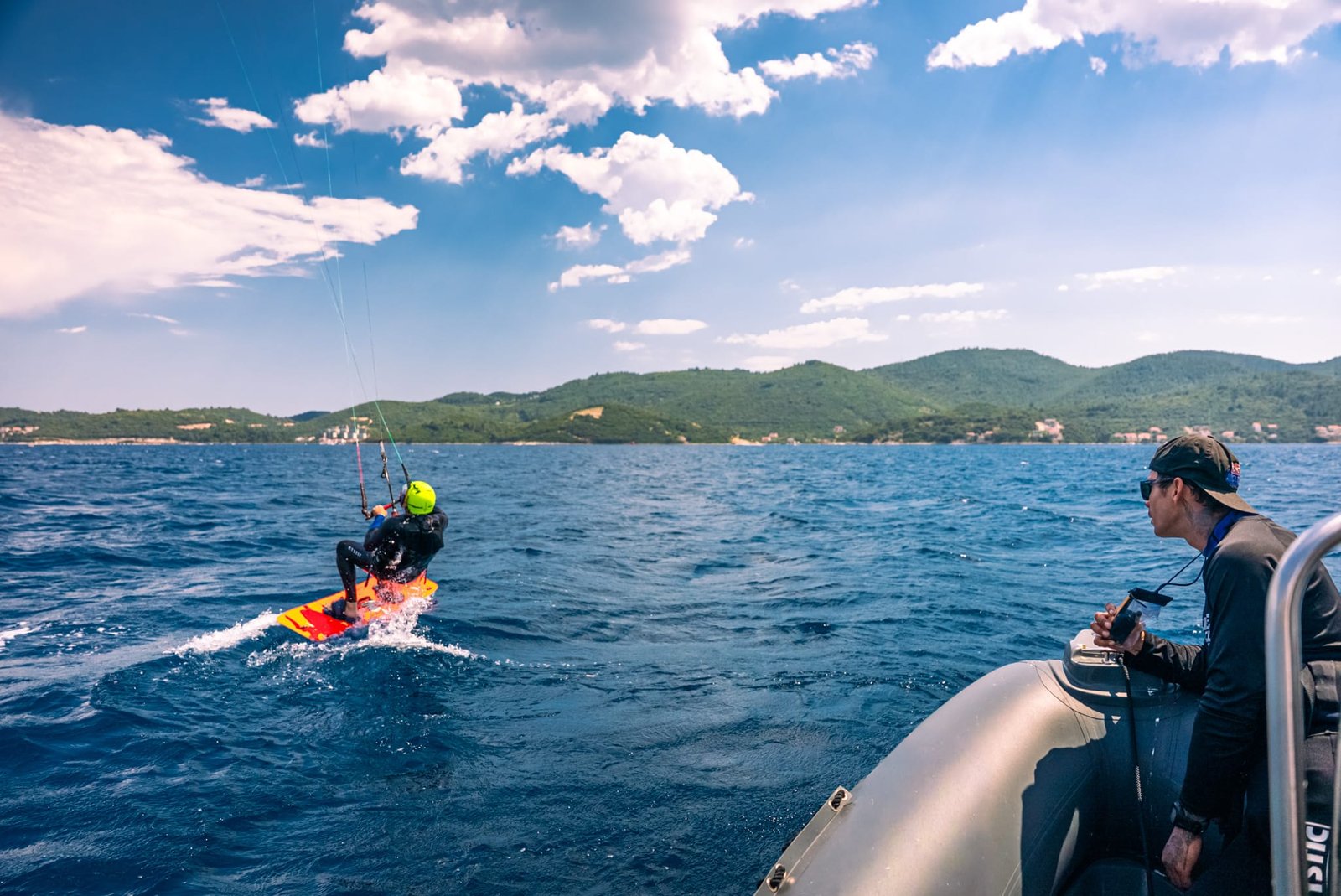
kite school from a boat.
our kite schoolKite school that is conducted in the deep with the help of a boat. Why? What are all the advantages.
There are a handful of different locations where kiteboarding can be practiced.
Locations or kite spots can vary depending on several factors.
The main characteristics of each spot are:
One thing is certain and we have to accept that, there is no spot with perfect conditions, but there are locations that meet all the requirements quite well.
Regardless of the characteristics of the spot, the most important thing is that the spot is safe. A safe spot often includes having a speedboat ready to use in case of emergency.
A person who wants to be a completely independent kiteboarder must master all the necessary skills to be able to practice kiteboarding in any safe spot. Regardless of whether the wind is strong or weak, the sea is shallow or deep, or the surface is flat or full of crashing waves (chop).
The main goal of every beginner is to become completely independent (as quickly as possible).
People generally take the term "fully independent" too lightly.
We come to the question of what kind of spot a kite school should be located at so that a beginner can master everything necessary and become independent in the most rational time possible.
It is certainly recommended that kite school with beginners be conducted in weaker wind conditions, but we can always compensate for the wind strength by choosing smaller kite sizes.
The main question that arises is choosing a location with shallow or deep water.
People mostly choose spots with shallow water. We feel safer in shallow water, but is this the best choice if we want to make quick and quality progress in the process of becoming independent?
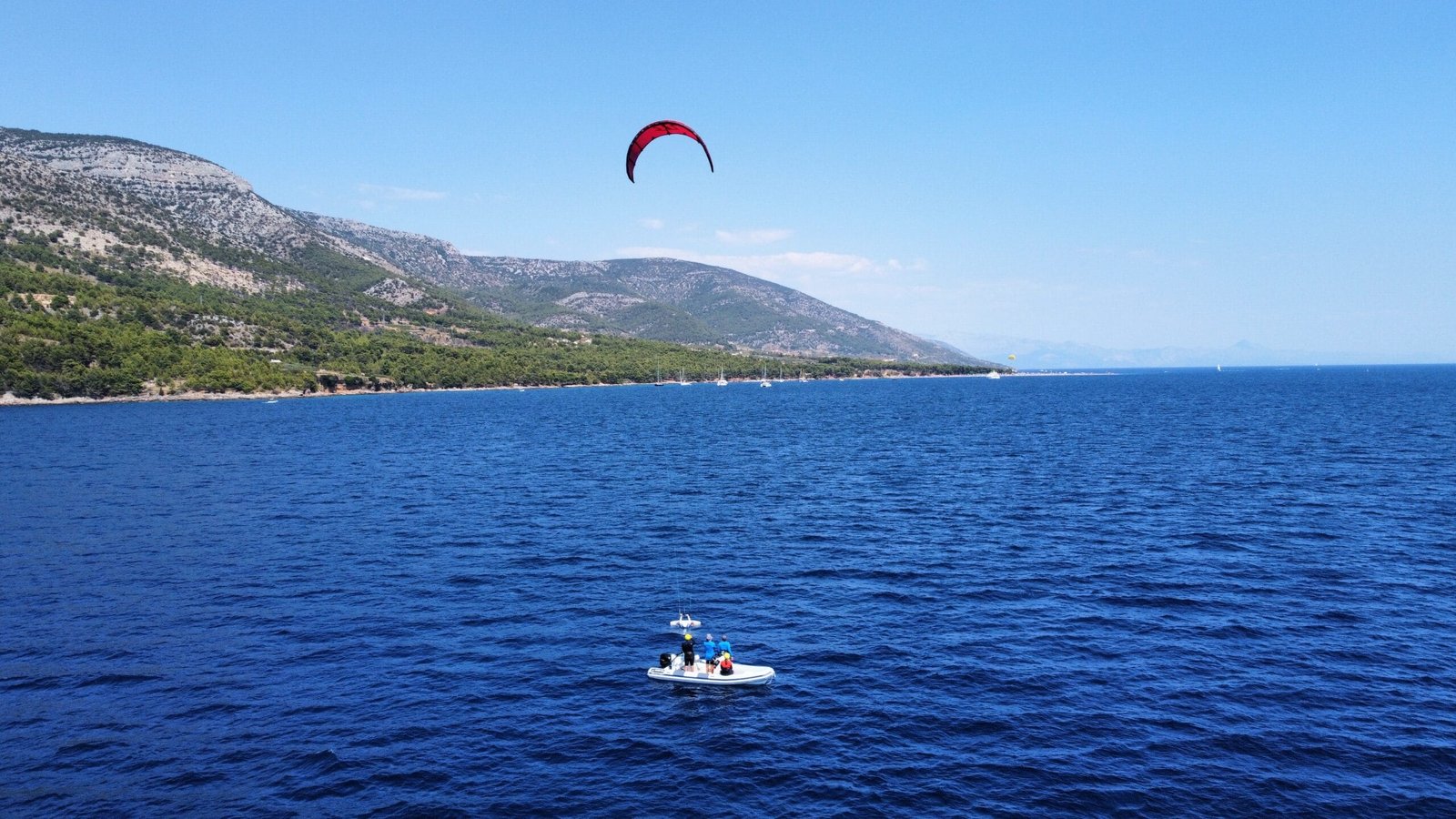
We will try to explain the advantages and disadvantages of kite school in depth and come to a certain conclusion.
Deep water generally creates fear and aversion. This does not have to be the case if deep water kite school is conducted in a proper, controlled and high-quality manner, with instructors who have experience and knowledge in working in deep water and from speedboats, because deep water kite school involves the use of speedboats.
In the vast majority of cases, a kite school that offers lessons in the deep sea does not have a large enough beach or the wind on the beach is not stable enough to allow the first introduction to kitesurfing in safe conditions on the shore, so kite school is conducted from a speedboat from the very beginning. Before going on a speedboat, it is necessary to do a detailed kiteboarding theory course on the shore.
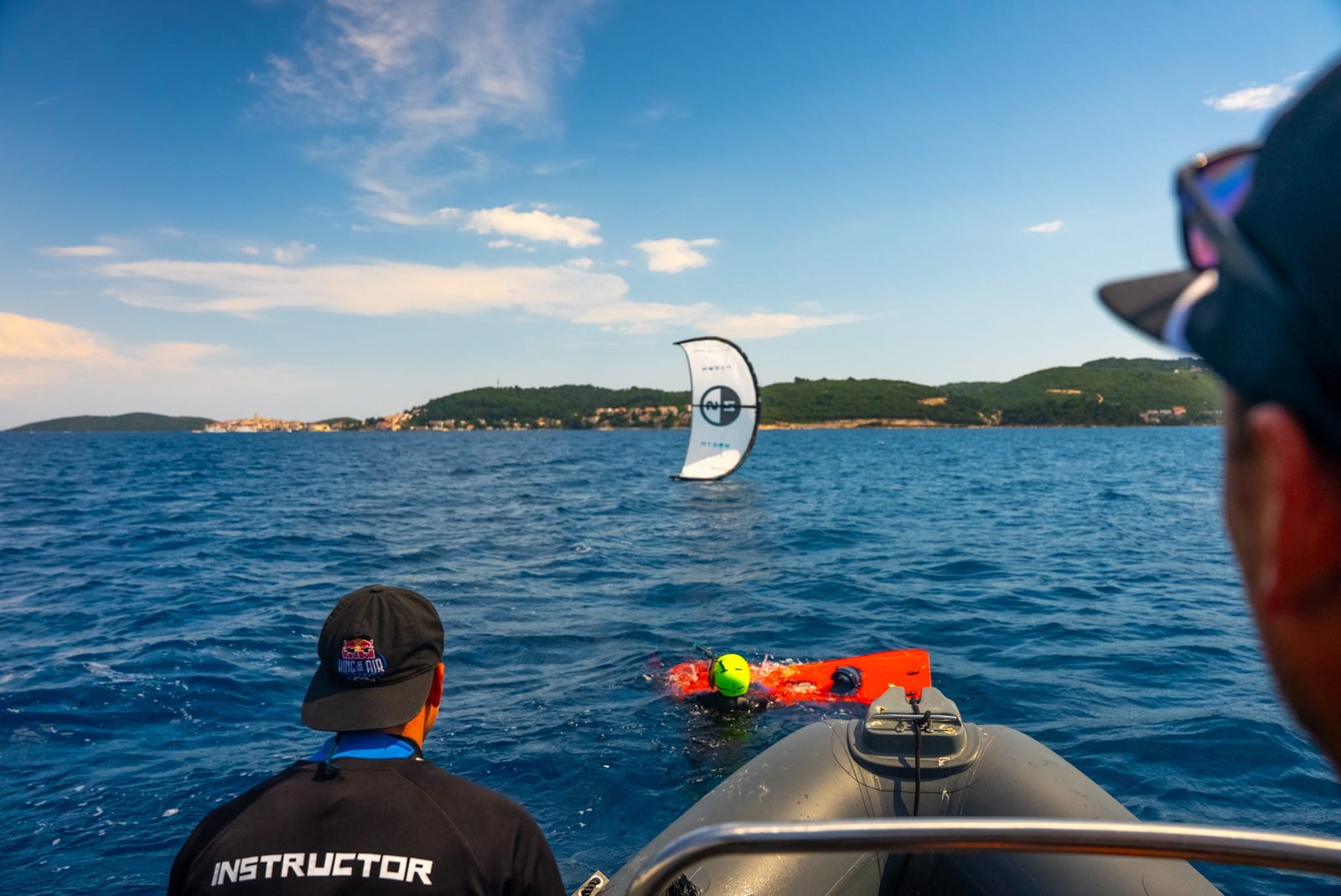
The first piloting with a kite and getting to know the wind window can be done well and without any problems from a boat with close monitoring and assistance from an instructor. The best option would be to do such things on the shore or in shallow water. The first piloting is done well from a boat, but it is more comfortable and practical to do it on the shore. Definitely one of the disadvantages of conducting kite school in deep water from a boat.
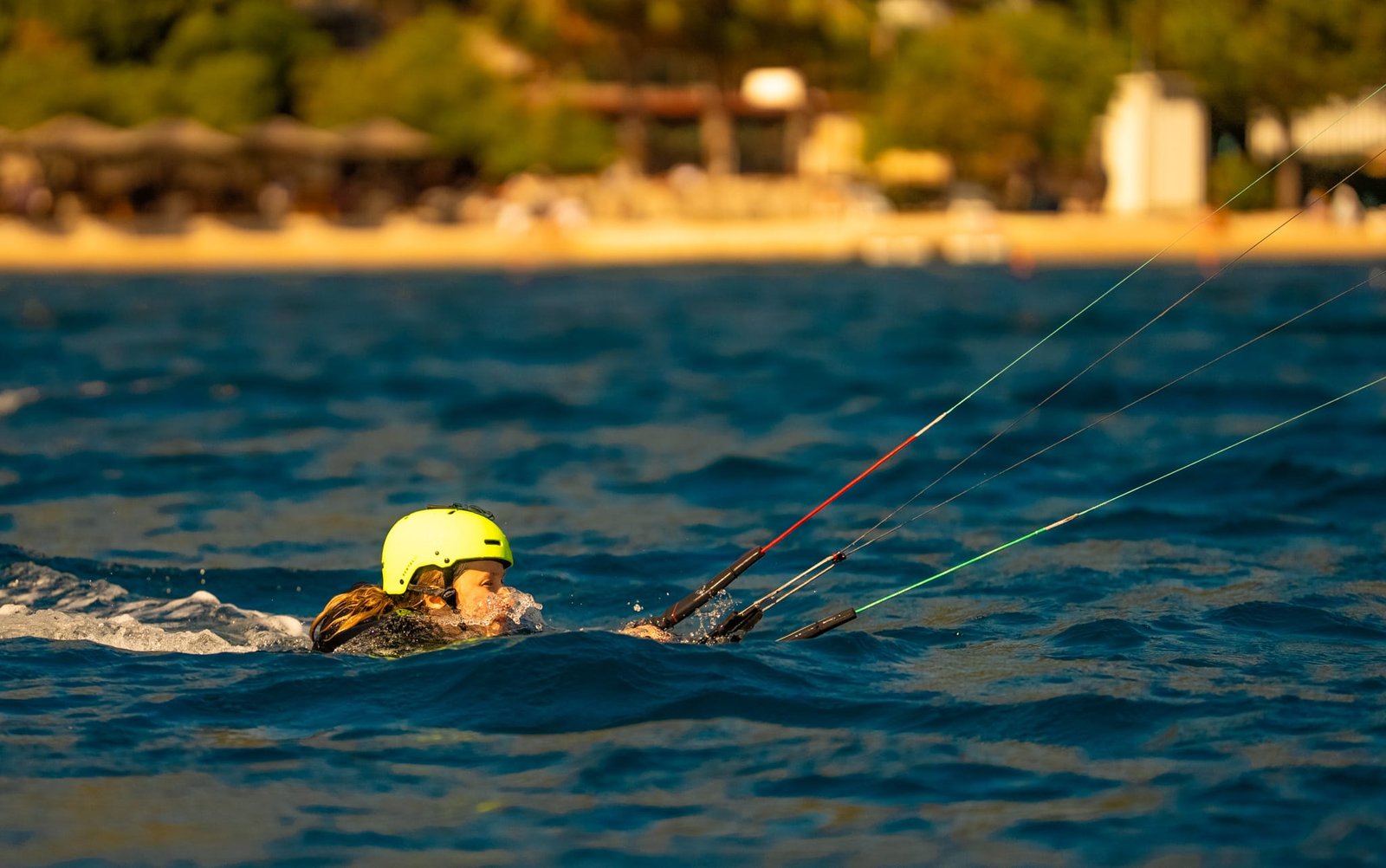
Once the student has a feel for and understands how the kite works, enters the deep water. By maintaining the correct body position in the deep sea, the student does not expend much energy, swimming is completely unnecessary. The instructor enters the sea with the student and helps with the first steps if necessary. Otherwise, instructor remains in the boat very close to the student, the entire time. The disadvantage is that the student's head is always close to the surface of the sea and unplanned entry of water into the mouth may occur until the student becomes accustomed to it.
Instructor all the time follows the student in a boat in downwind direction and stays very close to the student. After the lesson is finished, the student gets into the boat and returns to the starting point by boat, student does not need to waste time and energy on returning back. In shallow water, the student spends a lot of energy and time walking and returning to the instructor.
Bodydrag, as one of the crucial skills (if we want to become completely independent), is often put on the back burner in shallow water and is rarely perfected to the point where the student can always reach the board without walking. In deep water, this skill is much easier to master and the student does not have the ability to walk and rescue the board, student is forced to spend a little more time mastering this important skill. Important to note: a leash for the board connected to the student is strictly prohibited and very dangerous due to possible injuries. Kite school that uses a leash for the board? NO!
Beginners will often have their kites fall down on the water and it is important to master the correct technique and get a feel for the kite relaunch. In shallow water where the student can stand, the kite relaunch is much easier to perform. In deep water it is a bit more challenging but once the technique is mastered and the feel is gained, students can perform it without any problems. Someone who has only practiced kite relaunching in shallow water will have problems when they get into deep water.
Self rescue is also a very important skill that needs to be learned. Without this knowledge, no kitesurfer is completely independent. Self rescue is much easier and better learned in deep water. In shallow water, learning the self rescue technique is also often neglected.
Kiteboarding as a sport is becoming increasingly popular and attracting more and more people. Spots where it is "flat" and shallow are becoming increasingly crowded with kitesurfers. One reason is that in such a location there is no need for a boat, people feel safer and decide not to spend money on lessons with an instructor. They take their first steps independently or with the help of a kitesurfing friend. Such people are generally a potential danger on the spot. The second reason is that advanced and experienced kitesurfers prefer "flat" where it is easier and much more fun to perform jumps and acrobatics. On such spots it is increasingly difficult to find a safe enough space where a beginner could take his first steps in a relaxed and undisturbed way so as not to get a bad first impression and a negative experience while getting acquainted with the sport.
Kite school from a boat allows you to go and find a place where there is no one to conduct the lesson undisturbed. Also, in case the wind changes direction or strength, you can quickly find a new place to conduct the school in the most optimal wind conditions.
In the event that a student does not know what to do and panics, the kite inverts or the lines get tangled, with a boat, the instructor can very quickly and at any time reach the student, help, solve the problem and clarify the situation. In shallow water, it often happens that the instructor needs a lot of time to help the student in situations where student does not know how to react, especially in the phase when student starts riding the board. Student-instructor communication devices help a lot in this, but only if the student remains calm and focused on the instructions.
When a student reaches the stage of surfing, a speedboat is of great importance. Once a student starts surfing and has good position and control, they can surf for a few kilometers in each direction with a speedboat. Just one such ride allows a student to make incredibly rapid progress. In shallow water, this is impossible without a speedboat. The disadvantage of deep water is that there are always waves (depending on the strength of the wind) that make it difficult to balance on the board.
The most ideal option for conducting kite school from a speedboat is with two students at the same time. While one student practices and learns with the ever-present instructor, the other rests, observes the student's mistakes with the kite and receives feedback and answers to all questions.
kite school - cons in the deep.
- if there is a large swell and/or strong sea currents at the location
- the first introduction to kitesurfing is more comfortable in shallow water.
- if there is a strong fear of the student from deep water
- frequent contact with water and students face
- lack of experience in kite control on/near the shore
kite school - cons in the shallow.
- a lot of walking to the instructor/starting point
- incomplete mastery of bodydrag skills
- incomplete mastery of kite relaunch
- time required for reaction and physical assistance from the instructor
- riding on the board in very short lines
- discomfort due to proximity to other kites
- challenging to learn self rescue
conclusion.
If you are a beginner, the safest and most cost-effective decision in the long run is a kite school with experienced instructors.
If you decide to go to a school that is held in shallow water, make sure that the spot where the kite school is located is safe and not too crowded with other kitesurfers, as you will definitely not feel comfortable. Force bodydrag and kite relaunch without getting up on your feet, if possible.
If you decide to take a school that takes place in the deep end, choose locations where the waves are not huge. Be prepared for the first day of school to be a bit more demanding until you master the basics in the deep end, and later on you will benefit a lot more from it.
The main difference from all of the above is that students who have learned to kitesurf in shallow water will not be able to go into deep water on their own and will certainly need additional kite school to master the skills needed in deep water, while students who have learned to kitesurf in deep water can go into shallow water spots on their own without any problems.
You won't go wrong choosing a location in shallow or deep water, make sure you have an experienced licensed instructor, but also gain experience in deep water to become completely independent kiters.
