WHAT IS WINGFOILING.
Wingfoiling is an exciting and challenging water sport that combines elements from various other sports into one unique experience.
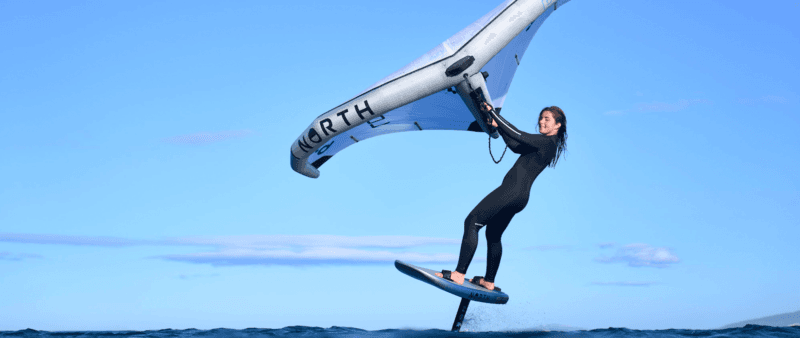
Welcome to the exciting world of wingfoiling, one of the newest additions to the water sports realm. Wingfoiling, which has become popular in recent years, combines elements of surfing, windsurfing and kiteboarding, merging them into a unique, dynamic and exciting sport. Wingfoiling, also known as wingsurfing or wingboarding, is a water sport in which you stand on a hydrofoil board or SUP (stand-up paddleboard) while holding an inflated sail, known as a wing. The wing is your primary source of propulsion, harnessing the wind to glide across the water. The real thrill begins when the wind is strong enough to lift you and your board off the surface of the water. That’s thanks to the hydrofoil. The hydrofoil, attached to the underside of the board, creates lift as you accelerate, giving you the sensation of flying above the water. Basic wingfoiling equipment includes:
Wing – a sail that is inflated and resembles a mini paraglider. Sizes usually range from 2 to 8 meters, with the size chosen depending on factors such as the rider's skill, body weight, and wind strength.
Foil board – This is a board that you stand on. Similar to a paddle board or surfboard, a foil board has a hydrofoil attached underneath it. Boards come in different sizes, with larger boards being more stable and better for beginners.
Hydrofoil – A hydrofoil is a wing-like part that attaches to the bottom of your foil board. It consists of a mast, a hull, and wings (front and rear). The primary purpose of a hydrofoil is to lift the board and rider above the water surface, reducing drag and allowing for a comfortable, fast ride.
Harness – While not always necessary, especially for beginners, a harness can be useful as you progress in foiling. It allows you to attach the wing, reducing the strain on your arms.
The difference between wingsurfing and wingfoiling?
The only real difference is the board. Wingsurfing uses a regular board, while wingfoiling uses a board with a hydrofoil attached underneath. Wingsurfing is a great introduction for beginners. It’s slower and easier to learn, requiring less technique than wingfoiling. No previous watersports experience is required, making it a great option for all abilities and ages. Those looking to progress to wingfoiling will need both a board and a foil specifically designed for wingfoiling. Understanding how the foil works and, more importantly, learning how to control it takes practice, but with a little instruction you’ll be flying in no time.
Now that you know what wingfoiling is, check out our wing school, which will allow you to progress quickly and have an incredible, unforgettable experience!